Driving Test Advice
Using Your Own Car for Your Driving Test: The DVSA Checklist (2026)
12 November 2026 · A1 Intensives
Quick answer: Yes, you can take your practical driving test in your own car, but it has to meet the DVSA's rules. It must be taxed, insured for a driving test, roadworthy and MOT'd (if over 3 years old), with legal tyres, no dashboard warning lights, L-plates front and rear, an extra interior mirror for the examiner and a proper passenger head restraint. If it fails any of these, the examiner will cancel your test and you'll have to book and pay again.
Every year, learners across West Yorkshire turn up at the test centre ready to go, only to be sent home before they've even started the engine. The reason is nearly always the same: the car they brought didn't meet the DVSA's requirements.
The good news is that every one of these problems can be avoided. Go through this checklist a week before your test, and again the day before.
Key takeaways
- Your own car is allowed, but the examiner checks it before the test starts.
- A failed car check means a cancelled test. You'll have to rebook and pay again (currently £62 weekdays, £75 evenings and weekends).
- Dual controls aren't required, but an extra rear-view mirror for the examiner is.
- Some models can't be used at all, and some recalled cars need proof of repair.
- Your insurance must cover the test itself. Check with your insurer, don't assume.
The DVSA own-car checklist
Tick off every item below before test day. These are the requirements published on the official GOV.UK driving test page.
Legal paperwork
- Taxed: check on GOV.UK using the number plate.
- MOT: a valid MOT certificate if the car is more than 3 years old.
- Insured for a driving test: many learner policies cover it, but some don't. Ring your insurer and ask specifically about the practical test.
Condition of the car
- Roadworthy: working lights, indicators, brake lights, horn and wipers, and no serious leaks.
- No warning lights on the dashboard that show a safety problem, such as the airbag or engine management light.
- Legal tyres: no cuts, bulges or damage, and at least 1.6mm tread across the central three-quarters of every tyre.
- No space-saver spare fitted. If you've had a puncture, get the proper tyre repaired or replaced first.
- Clean and tidy: remove rubbish and clutter from the dashboard, footwells, door pockets, cup holders and seats.
- Smoke-free: nobody should smoke in the car just before or during the test.
Equipment the examiner needs
- An extra interior rear-view mirror for the examiner. Clip-on versions are cheap and widely available.
- A passenger seatbelt that works properly.
- A proper passenger head restraint. Slip-on types aren't allowed.
- L-plates on the front and rear (or D-plates in Wales), clearly visible and not blocking your view.
Vehicle specification
- Four wheels and a maximum authorised mass of no more than 3,500kg (you'll find this in the handbook).
- Able to reach at least 62mph.
- An officially fitted mph speedometer. A phone app or add-on display doesn't count.
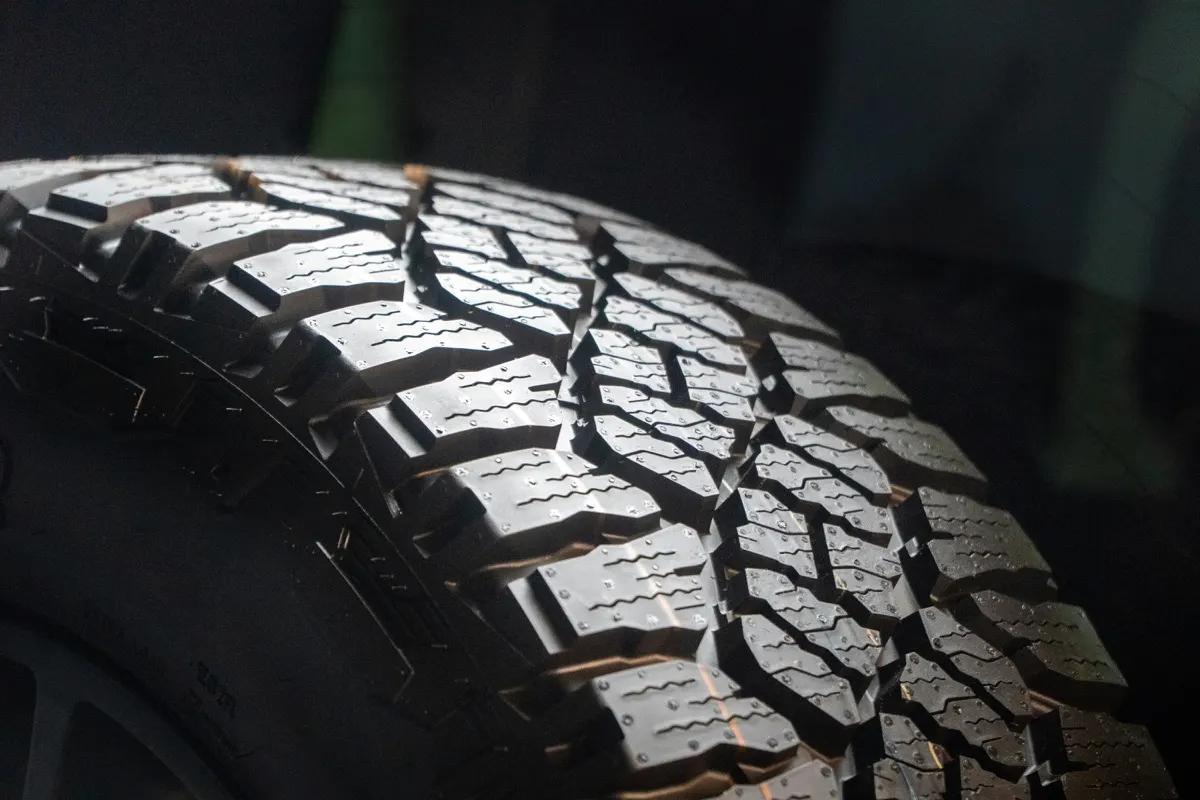 Check every tyre, including for cuts and bulges on the sidewall, not just the tread depth.
Cars you can't use for your driving test
Some cars don't give the examiner a clear all-round view, so the DVSA doesn't allow them. At the time of writing, these include:
- Any panel van (no rear seats or rear side windows)
- BMW 218 convertible and BMW Mini convertible
- Ford KA convertible
- Polestar 4 and Polestar 5
- Smart Fortwo (2-door)
- Toyota iQ
- VW Beetle convertible
If you drive a coupé or any other convertible, contact the test centre before your test to check it's acceptable. Convertible roofs must stay up for the whole test.
Recalled cars
Certain Citroën, Chrysler, Jeep, Peugeot and Vauxhall models were recalled over airbag problems. If your car is on the DVSA's list, you must be able to prove the recall work was done (or that your car wasn't affected), for example with a stamped recall letter or a screenshot from the manufacturer's online recall checker. Without proof, your test will be cancelled and you could lose your fee.
The full list of affected models and dates is on the GOV.UK page.
Driver aids, dashcams and tinted windows
- Allowed: electronic parking brake, hill-start assist, cruise control, speed limiters, parking sensors and cameras, lane assist and blind-spot monitoring.
- Not allowed during the test: self-parking features, Tesla Autopilot and your own sat nav (the examiner provides one for the independent driving section).
- Dashcams: fine if they only face outward and don't record video or audio inside the car.
- Tinted windows: the windscreen and front side windows must meet the legal tint limits. Very dark rear windows can also get a test cancelled if the examiner can't see clearly.
Manual or automatic?
You can take your test in either. Just remember: if you pass in an automatic, your licence only covers automatic cars. If you want to drive manual cars later, you'll need to pass another test. Not sure which to choose? Read our manual vs automatic guide.
Getting your own car to the test centre
As a learner, you still need to follow learner rules on the way to your test: L-plates on, learner insurance in place and a supervising driver who is at least 21 and has held a full licence for at least 3 years. Arriving alone is driving illegally, and the examiner won't overlook it.
Own car or your instructor's car?
Using your own car can feel comfortable, especially if you've done a lot of private practice in it. But there are good reasons most learners take their test in their instructor's car:
- It's already test-ready: dual controls, examiner's mirror, roof sign and the right insurance.
- No risk of a surprise cancellation for a warning light or worn tyre.
- You'll have just had a lesson in it, so you're warmed up on local test routes.
- Your instructor can sit in on the test if you'd like them to, and talk you through any faults afterwards.
All our intensive driving courses include the use of a fully prepared, dual-controlled car for your practical test, so the car is one thing you don't need to worry about.
Ready for test day?
We teach learners across Dewsbury, Wakefield, Halifax, Huddersfield, Leeds and Bradford. If you'd rather turn up in a car that's guaranteed to pass the DVSA's checks, book an intensive course or get in touch and we'll help you choose the right package.
Feeling nervous about the big day? Read our tips on how to calm driving test nerves.
FAQs
Can I use my own car for my driving test?
Yes, as long as it meets the DVSA's rules: taxed, insured for a driving test, roadworthy, MOT'd if over 3 years old, with legal tyres, L-plates and an extra interior mirror for the examiner.
Does my car need dual controls for the driving test?
No. Dual controls aren't required in your own car. Hire cars are different: a hire car must have dual controls.
What happens if my car doesn't meet the DVSA requirements?
The examiner will cancel your test before it starts and you'll have to book and pay for another one.
Do I need an extra mirror for the examiner?
Yes. Your car must have an extra interior rear-view mirror for the examiner. A clip-on mirror is fine.
Can I have a dashcam in my car during the test?
Yes, if it only faces outward and doesn't film or record audio inside the car.
Will a dashboard warning light stop my test?
It can. Any warning light that shows a safety issue, such as the airbag light, means the car can't be used. Get it fixed before test day.
Does my learner insurance cover the driving test?
Not always. Some learner policies cover the practical test and some don't. Check with your insurer before you book.
Requirements checked against GOV.UK in November 2026. DVSA rules can change, so always check the official page before your test.